 By
By 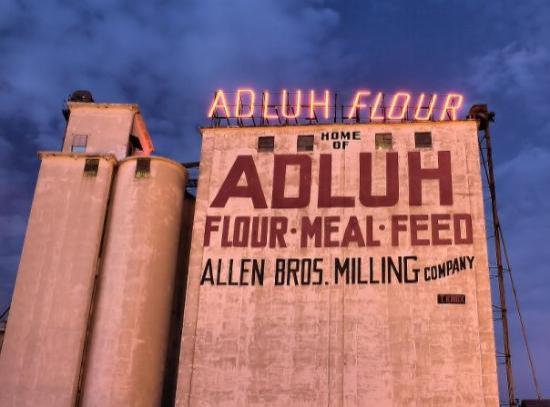
One of the most distinctive sites visible on the Columbia skyline is the neon sign for ADLUH FLOUR. With its red glow shining day and night, it is, for Columbians, a radiant connection to the past.
Once in the heart of an entirely industrial area amidst railroad crossings and textile mills, Adluh Flour now stands alone in the heart of upscale eateries and drinking establishments. A sole reminder of times gone by.
“This whole area used to be made up of industrial businesses,” says Jack Edgerton, Jr., president of Adluh Flour. “With the re-development and renovation of the Vista, we’re the only one left. We now coexist among the local restaurants and bars.”
The Adluh (pronounced Ad-loo) flour mill, located in the heart of the Vista at 804-1/2 Gervais Street, began making Adluh flour in Columbia in 1900. Today, the mill continues to make over 20 quality Adluh products under the expertise of Allen Brothers Milling Company.
While the quality of the neon bulbs for their historic sign may come and go, the quality of the products manufactured inside the historic 100-year-old mill never changes. “Quality is what has kept us in business,” notes Edgerton.
The mill was originally built and owned by the Adluh Milling Company who ran the mill until the early 1920s. However, by the mid 20s, the company had gone bankrupt and the bank foreclosed on the mill. Remarkably, the bank did not shut the mill down as is customary in bankruptcy situations. It continued operations and began to actively seek out buyers. In 1926, the Allen Brothers Milling Company of North Carolina purchased the Adluh mill for $20,000 cash.
The Allen Brothers Milling Company has been operating flour and corn mills since the 1820s. “Our original mill was located in Peachland, North Carolina,” states Edgerton. “After the civil war, we moved our main milling operations to Mebane and later, we opened another mill in Wadesboro.”
With the purchase of the Adluh mill, Allen Brothers began moving its operations into South Carolina. By the late 1930s, Allen Brothers had moved everything to South Carolina by purchasing a mill in Greenwood, now the Greenwood Roller Mills, and moving the equipment from the Mebane plant.
In 1942, there were 42 mills that produced local flours in South Carolina. Today, there are only two and they are both owned by Allen Brothers. “Our quality speaks for itself,” declares Edgerton. “By using an original stone mill, we produce unique, quality products that have survived local and national competition and have made ‘Adluh’ a household name in the Carolinas.”
Today the Columbia operations make four products – flour, cornmeal, grits, and animal feed – in three, interconnected mills. The mills typically operate 16 hours per day; however, Edgerton is quick to note that occasionally the mills will run 24 hours a day to accommodate seasonal demands.
The name Adluh came from the original owners – the Crooners. They had a daughter named Hulda and her name spelled backwards is Adluh. The original packaging included a blond Dutch girl who was supposedly Hulda herself. Today, the packaging features a brunette woman, Millie Lewis.
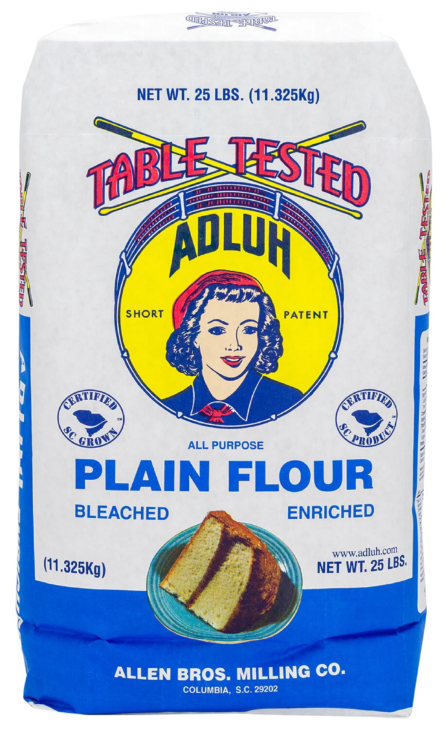
Over the years, Millie became know as Columbia’s “Welcome Wagon.” She would put together welcome baskets for newcomers and would include Adluh products. She would visit the Allen Brothers’ mill on a weekly basis to pick up supplies.
“When Millie would come around, all operations would stop. The men just loved her,” notes Edgerton. Her dedication to Adluh flour and the admiration of the mill workers led to her becoming the model for the packaging. And she’s still seen on packages today.
There are several ingredients to Adluh’s success over the last century. Most importantly is the support of local farmers and growers. “All the ingredients that go into Adluh products are grown by South Carolina farmers,” says Edgerton. “By supporting South Carolina’s agriculture, we are able to get the highest quality as well as keep the local economy growing.”
Another important ingredient in Adluh’s success is their status as a historic landmark. The entire mill is listed on the National Register of Historic Properties and is a protected landmark. While many of the Vista locations have been modified with recent renovations, the buildings and signage for Adluh remains the same and reminds Columbians of days long gone when industry ruled the area.
A final key to their success is Adluh’s support of the local community. “We’re very involved with our immediate community (the Vista) as well as Columbia and beyond,” says Edgerton. In addition to supporting local agriculture, the company donates foodstuffs to local charities as well as assisting overseas disaster relief efforts. Allen Brothers has assisted local farmers during times of drought by providing animal feed to sustain their animals. Finally, they provide educational services.
With uncompromising quality products over the 100 years, Adluh is a household name for many South Carolinians. And while the official state flower is the jasmine, Columbians know their state “flour” is Adluh.